




What Is Sperm Donation?
The dream of becoming a father can sometimes come true by a different path — and that path is no less meaningful than any other. Sperm donation is a proven, safe assisted reproductive method that helps couples affected by male-factor infertility, or single women who wish to have a child without a partner, achieve pregnancy using donor sperm from an accredited sperm bank. Our center uses only donor samples sourced from accredited sperm banks that have completed full serological screening.
A brief history of sperm donation

Who Can Turn to Sperm Donation?
Whatever story brought you here, our door is open to you. For some, sperm donation is a medical necessity; for others, it's a conscious choice — either way, we're with you with the same care and warmth.
Situations where sperm donation is a clear necessity
- Absence of sperm production in the male partner (Azoospermia)
- Single women without a male partner who wish to have a child
Situations where sperm donation can be a strong option
- Repeated failed IVF attempts due to inadequate sperm parameters (severe oligoasthenoteratozoospermia)
- Sperm-related fertilization failure
- Severe sperm morphology defects (macrocephaly, pin-head, immature sperm, centriole defects, etc.)
- Hereditary genetic disease or carrier status in the male partner with no identifiable genetic origin
Success Rates in Sperm Donation
Our center uses only high-quality donor sperm from accredited sperm banks. Because of this, the single biggest determinant of success in sperm donation is largely the female partner's egg quality. Results can vary from person to person; these figures are not a guarantee, but averages based on our center's clinical data.
How Does the Process Work?
You're never alone at any step: your medical team and coordinator plan the process with you, step by step. Since the male partner isn't involved in the procedure, no medical preparation is required on his part.
Specialist physician consultation
Your medical history is taken, and a physical exam and any necessary tests are planned together.
Coordinator consultation
Your travel and accommodation are arranged, your profile forms are completed, and the sperm donor is also selected at this stage.
Psychological counseling
If you wish, you can discuss anything on your mind about the donation process, and life afterward, with a specialist.
Screening tests
The relevant blood and hormone tests are scheduled.
Ultrasound / HSG if needed
Your uterine structure and tubes are evaluated to help secure the best possible outcome.
Method selection: IUI or IVF
Together, you decide whether insemination (IUI) or IVF will be used, based on your suitability and preference.
Insemination or egg collection
With IUI, the thawed donor sperm is placed into your uterus using a special catheter. With IVF, the eggs obtained through ovarian stimulation are injected with the selected donor sperm using microinjection (ICSI).
Embryo monitoring and transfer
On the IVF path, embryo development is shared with you daily by our laboratory; embryo transfer is a simple, comfortable procedure that takes about 15 minutes.
Pregnancy test
The result is determined by a Beta hCG blood test 9–12 days after transfer or insemination; if positive, an ultrasound check follows 2–3 weeks later.
How Is Donor Sperm Selected?
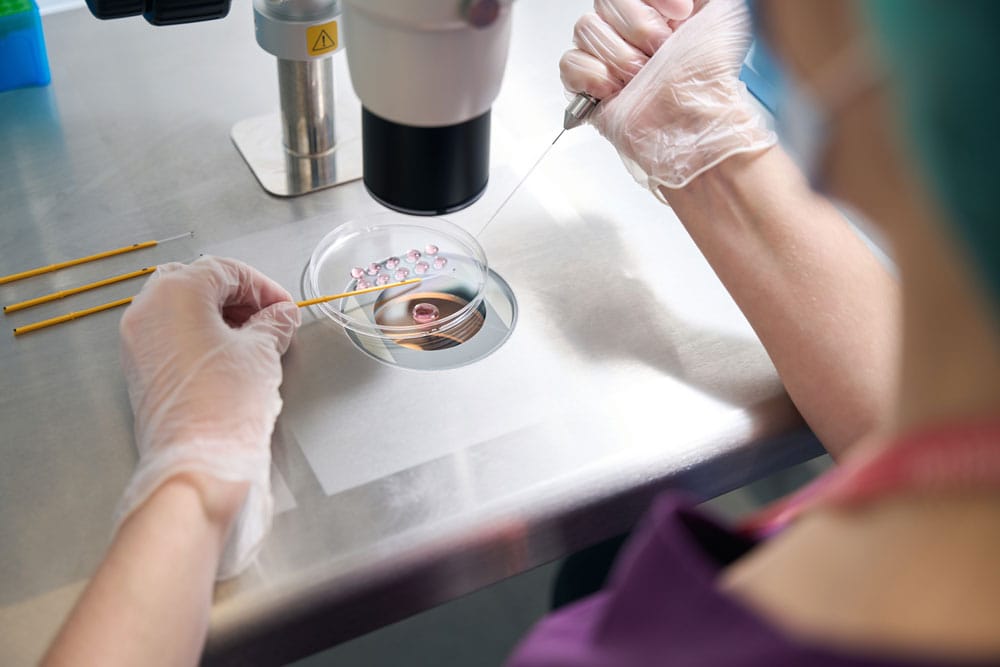
A viability loss of around 20–30% is normal once a frozen sample is thawed; the surviving portion largely consists of the healthiest sperm. Since a donor sample contains millions of sperm and only one is needed for fertilization, the risk of "not finding enough sperm" in sperm donation is close to negligible. At our center, in addition to morphological selection, we favor the HOST method, which pinpoints the sperm with the lowest likelihood of DNA fragmentation — the genetically healthiest.
Health screening our donors undergo
- Comprehensive health history and physical examination
- Blood type and serology tests (HIV, Hepatitis B/C)
- Multiplex PCR screening for syphilis (VDRL) and other sexually transmitted infections
- No sample is used until the mandatory 6-month quarantine period is complete
How we find the donor best suited to you
- A donor is selected among blood-type-compatible candidates whose physical traits resemble the male partner
- Skin, eye and hair color and body build are carefully matched
- All donor sperm is sourced from accredited sperm banks abroad, in line with the relevant law

Why Kolan British IVF Center?
International standards
Donor screening follows ASRM/ESHRE guidelines, applying the most current medical knowledge.
Sperm selection via the HOST method
An advanced technique that identifies the healthiest sperm with the lowest risk of DNA fragmentation.
End-to-end coordination
Travel, accommodation and appointment planning are managed on your behalf by a dedicated coordinator.
Psychological counseling support
You always have access to an expert psychologist for any social or emotional questions about donation.
Strict confidentiality
Donor and recipient identities are fully protected on both sides.
Transparent communication
You receive friendly, daily updates on your treatment progress throughout the process.
Real Patients, Real Stories
The stories of families who chose this path and welcomed the baby of their dreams inspire us every day. Here are reviews from some of our own patients treated at our center.
Deciding to start IVF treatment with my husband was hard for us. But with the care and experience of the team at Kolan British IVF Center, everything went smoothly. We now hold our baby in our arms and couldn't be happier. Thank you!
After years of unsuccessful attempts, we came to Kolan British IVF Center. They supported us throughout with a professional, warm approach. Now we're living the best days of our lives with our son. We're so grateful!
In our 10 years of marriage, we've never been this close to becoming parents. Thanks to the care, experience and warmth of the Kolan British team, we're now expecting our baby. We're grateful to the whole team!
Cost of Sperm Donation
Cost is shaped individually based on whether IUI or IVF is chosen, the number of tests required, and whether genetic screening (PGT) is preferred. Rather than quoting a flat figure, we prepare a personalized, itemized, transparent cost plan during your free initial consultation — no surprises, just clarity.
Privacy and Legal Safeguards
So you can make your decisions with complete peace of mind, the entire process is transparent, protected and governed by law.
Identity confidentiality
The identities of donor and recipient are kept mutually confidential. Applicant couples can only access the information on the donor's profile form; donors likewise cannot access information about the couples who used their sperm.
Informed consent
We give you clear, understandable information at every step; the process only moves forward with your consent, and no procedure is performed without it.
Legal framework
IVF and donation treatments in Cyprus are governed by Law No. 57/2014: donor sperm must be sourced from accredited banks, the donor must be aged 20–45, and all required laboratory/genetic tests must be complete.
The Emotional Side of Donation
This path can carry its own emotional and social dimensions, and that's completely natural. But know this: from the moment you conceive, everything that follows is your story, just like any other pregnancy — the child you have will be entirely yours, legally and in your heart.
Carefully matching the male partner's physical characteristics when choosing a donor helps this bond feel even stronger. Who you share this journey with, and when, is entirely your decision — your identity is securely protected.
Our psychological counseling support is always here so you're not alone on this sensitive, beautiful journey.
Frequently Asked Questions
Does a baby conceived through sperm donation resemble the father?
Which is more successful, IUI or IVF?
Is sperm donation legal in Cyprus?
Can single women benefit from sperm donation?
How much does sperm donation cost?
What is considered when selecting a sperm donor?
Related Treatments
Free Consultation
Our expert consultants will get back to you as soon as possible.
