




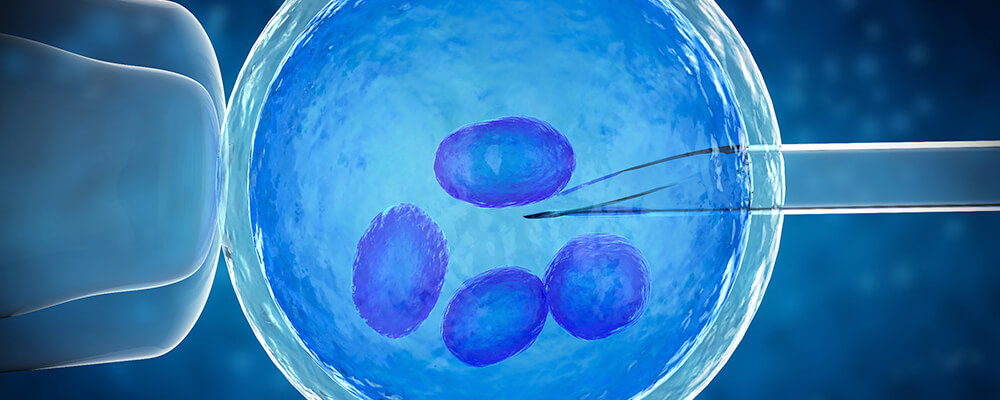
Preimplantation Genetic Test (PGT) is genetic tests that can be applied to embryos before implantation (attachment to the uterus).
Advances in genetics and IVF laboratory techniques allow to evaluate whether embryos are healthy in terms of a certain disease or whether there are problems in the number and structure of their chromosomes.
With the widespread use of PGT, a healthy embryo selection is ensured; It is aimed to increase the healthy live birth rates in couples who are known to be carriers of genetic disease, in couples with recurrent miscarriage or recurrent IVF failure.
There are two stages in which genetic analysis can be done in the laboratory environment: before fertilization and after fertilization.
The polar body structure of the mature egg taken from the woman in the pre-fertilization period, which reflects the genetics of the egg, can be genetically examined.
However, in this case, only the genetic information of the egg can be obtained. However, a significant part of the genetic problems in the embryo occur during cell divisions after fertilization, and these problems can only be detected by examining the biopsy material taken from the embryo.
For this reason, preimplantation genetic tests are mostly performed for the embryo at the post-fertilization stage.
According to the developmental status of the embryo; During the division phase, embryo cell biopsy (blastomer biopsy) or biopsy (trophoectoderm biopsy) from the outer cell mass can be applied at the blastocyst stage.
Different methods are preferred according to the genetic problem to be examined.
In single gene diseases such as cystic fibrosis, hemophilia, thalassemia, special examinations are made for these regions and healthy embryos can be selected, since the gene region of the disease is known.
In this way, couples who are sick or carriers are offered a chance to have healthy children.
In cases such as translocation carriers, even if couples are completely healthy, genetic changes to the embryo can lead to recurrent miscarriages or IVF failures.
In this patient group, the chance of living birth can be increased by choosing a healthy embryo with genetic examinations applied to the embryos.
Couples who do not have a known genetic disease can also optionally have their embryos undergo genetic testing.
Especially in couples with advanced maternal age (>35) or serious disorders in sperm parameters, interest in these tests is increasing.
With these methods, the chance of pregnancy and the possibility of taking a healthy baby home increase.
PGT is especially recommended in the following cases:
* Advanced maternal age
* Recurrent pregnancy loss
* Recurrent IVF failure
* Severe male factor
* The only known gene disease carrier
* Known translocation carrier
* History of fetal anomaly or chromosomal disease in previous pregnancies
Apart from these groups, PGT can be applied in order to shorten the duration of pregnancy or optionally.
Preimplantation Genetic Diagnosis Methods:
* FISH (Fluorescence In Situ Hybridization)
* Array CGH (comparative genomic hybridization)
* NGS (Next Generation Sequencing – Next Generation Sequencing)
What is FISH?
FISH is a molecular technique that makes certain DNA fragments visible in cells using fluorescent dyes.
It is used to evaluate the chromosome number and structure of embryos in IVF treatment.
With the FISH method, 3–9 chromosome pairs, including sex chromosomes, can be evaluated.
In this way, syndromes such as trisomy 13, 18, 21 and the sex of the embryo can be determined.
Biopsy from the embryo is usually taken from cells called blastomers on the 3rd day.
Biopsy cannot be taken from embryos that have not reached the sufficient number of cells.
Fresh transfer can be made in the same cycle, as the FISH results are obtained in about 24 hours.
The most important limitation of the FISH method is the inability to evaluate all chromosomes.
What is CGH (ACGH)?
The ACGH method provides numerical and structural examination of all 23 pairs of chromosomes in the embryo.
Embryo DNA is evaluated by comparing it to DNA that is known to be normal.
Thanks to this method, the healthiest embryos are selected and the success of IVF is tried to be increased.
Today, ACGH has largely been replaced by the NGS method.
What is NGS?
NGS is the newest and most sensitive method of preimplantation genetic testing.
In this technique, the DNA of the embryo is reproduced, fragmented and arranged in detail.
Thanks to NGS, chromosomal abnormalities and mosaicity can be detected more reliably.
NGS results are reported in three ways:
* Euploid (normal): 46 chromosomes, transferable embryo
* aneuploid (abnormal): chromosome number is faulty, non-transferable embryo
* Mosaic: Normal and abnormal cells coexist, can be transferred in special cases
Abnormal embryos that are transferred without PGT can be pregnancy, premature abortions or pregnancies with anomalies.
In order to reduce these risks, many couples today turn to PGT methods.
When NGS is applied, the results are obtained in about 14 days and the embryos are frozen in this process.
After the results are obtained, the uterus preparation is made and healthy embryos are transferred.
The biggest advantage of NGS is that all chromosomes can be evaluated in detail.
In addition, the results are more reliable because the mosaicity rate is lower in the blastocyst stage.
In this way, unnecessary embryo loss and wrong elimination risks are reduced.
Frequently Asked Questions
We usually start treatment on the 2nd or 3rd day of your period, and the process is completed within approximately 20-21 days. After the transfer, we wait 12 days and perform a pregnancy test on your blood.
Our success rates generally range between 60% and 80%. These rates may vary depending on age and health status.
Our donors are selected from healthy individuals aged 20-30 who meet the appropriate criteria.
Yes, we can select healthy embryos using genetic screening methods. For couples with a family history or risk of genetic disease, this method offers a very high chance of having a healthy baby.

Free Consultation
Our expert consultants will get back to you as soon as possible.
