




What Is TESE / Micro-TESE?
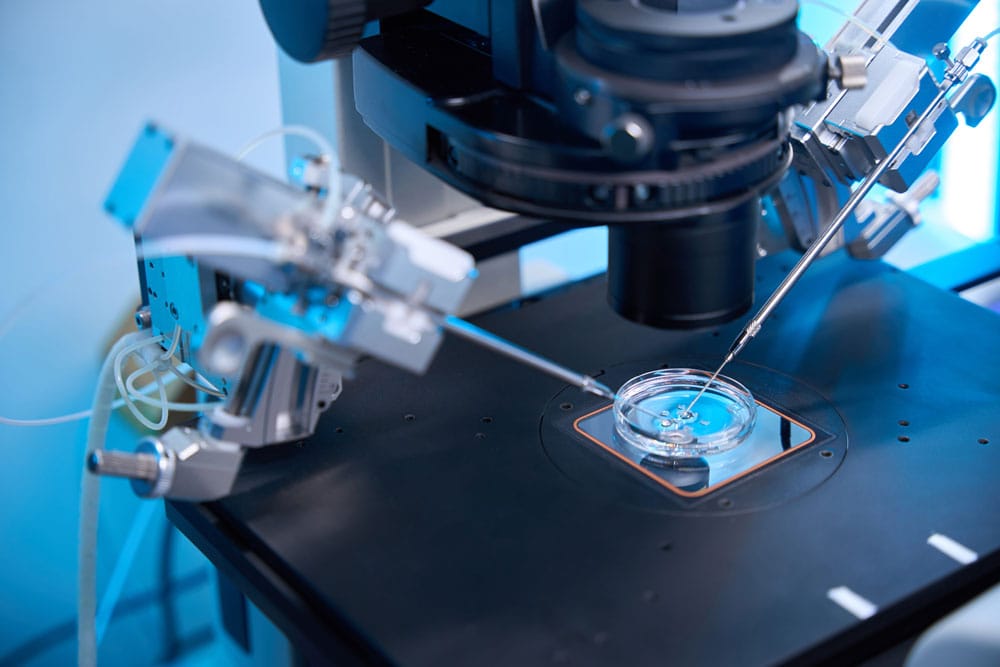
On the journey to fatherhood, hearing that "your sperm doesn't appear in the semen sample" can feel devastating — but this is often not the end of the road, it's a different beginning. TESE (Testicular Sperm Extraction) is a technique used for many years, with proven safety in IVF treatment, that surgically retrieves sperm directly from testicular tissue in men whose semen contains no sperm at all (azoospermia). Micro-TESE is a more advanced and precise version of the same procedure performed under an operating microscope; thanks to the magnification the microscope provides, the urologist can far more clearly identify the "tubules" where sperm production is still occurring. This both increases the chance of finding sperm and minimizes damage to testicular tissue, since smaller, more selective tissue samples are taken.
The difference between TESE and Micro-TESE
Who Can Undergo TESE / Micro-TESE?
Learning that no sperm was found in your semen sample can raise many questions about the process. The good news is this: a diagnosis of azoospermia does not mean you cannot become a father — with the right evaluation, many of our patients are able to have viable sperm retrieved from the testis.
Cases where TESE / Micro-TESE is necessary
- No sperm at all present in the semen sample (azoospermia)
- Non-obstructive azoospermia: insufficient sperm production in the testis due to congenital or acquired causes
- Obstructive azoospermia: sperm production is normal, but a blockage in the ducts prevents sperm from entering the semen
- Failure to retrieve sperm in previous TESA/PESA attempts
Cases where it may be a strong option
- Cases where the likelihood of finding sperm is assessed following genetic evaluation (e.g. Y-chromosome microdeletion, Klinefelter syndrome)
- Cases where vasectomy reversal is not possible
- Patients with a history of cryptorchidism (undescended testis)
TESE / Micro-TESE Success Rates
The sperm retrieval rate varies from person to person depending on the underlying cause of azoospermia (genetic, hormonal, structural). These figures are not a guarantee, but general averages based on the clinical literature and our center's experience. Retrieved sperm can be frozen for storage and used with ICSI (microinjection).
How Does the Process Work?
You are not alone at any step: your urology team, our embryology laboratory, and your coordinator plan the process with you, step by step.
Specialist urology evaluation
The cause of azoospermia is investigated through hormone profiling, physical examination, and genetic testing if needed.
Female partner evaluation
In parallel, the female partner's ovarian reserve and overall reproductive health are evaluated, and the treatment timeline is planned together.
Genetic counseling
If needed, results of tests such as Y-chromosome microdeletion and karyotype are reviewed together with a genetic specialist.
Anesthesia evaluation
Since Micro-TESE is performed under general anesthesia, an anesthesiologist carries out a pre-assessment.
The Micro-TESE procedure
Under the operating microscope, the testicular tissue is carefully scanned and samples are taken from the areas with the highest likelihood of sperm production (2–4 hours).
Real-time laboratory analysis
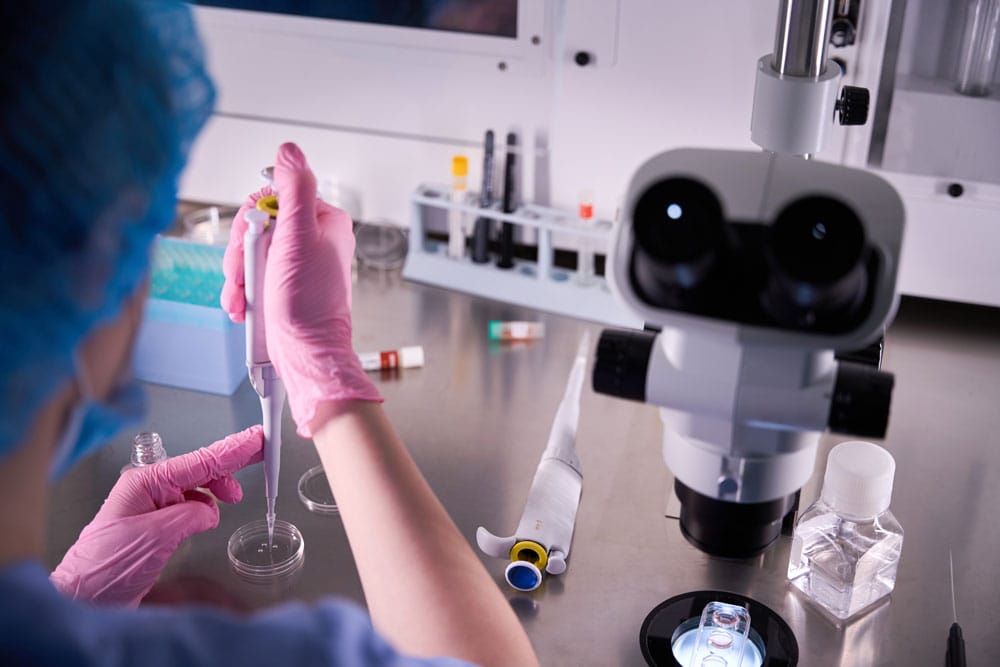
The tissue samples taken are examined in real time in the embryology laboratory during the procedure; you are informed immediately if sperm is found.
Freezing (cryopreservation)
Sperm that is found is safely frozen and stored for future use.
Fertilization with ICSI
The eggs obtained from the female partner are fertilized with the retrieved sperm through microinjection (ICSI).
Embryo monitoring and transfer
Embryo development is shared with you daily by our laboratory; embryo transfer is a simple and comfortable procedure.
Pregnancy test
The result is determined by a Beta hCG test 9–12 days after transfer.
What Are the Risks of TESE / Micro-TESE?
Micro-TESE is a reliable surgical procedure that has been performed for many years, with a fairly low risk of serious complications. The vast majority of our patients tolerate the procedure very comfortably; the mild and temporary effects that may rarely occur are:
- Mild pain and tenderness
- Mild bleeding or bruising
- Minor swelling that resolves on its own within a few days
Our team carefully plans the procedure to minimize tissue damage and follows you closely throughout your recovery.
Can Micro-TESE be performed more than once?
What Are TESA & PESA?
When sperm production in the testis is normal but a congenital or acquired blockage prevents sperm from entering the semen, sperm can be retrieved using much less invasive methods.
TESA (Testicular Sperm Aspiration)
- A procedure that retrieves sperm directly from the testis using a needle
- Usually performed under local anesthesia
- A short, suture-free procedure
PESA (Percutaneous Epididymal Sperm Aspiration)
- A procedure that retrieves sperm with a needle from the sperm-carrying duct called the epididymis
- Can be performed under local anesthesia
- Requires a much less invasive surgical intervention than Micro-TESE
The risk of bleeding with these methods is low but not entirely zero. Together with our experienced urologist, our center successfully performs TESE, Micro-TESE, TESA, and PESA procedures for patients who need them.
Why Kolan British IVF Center?
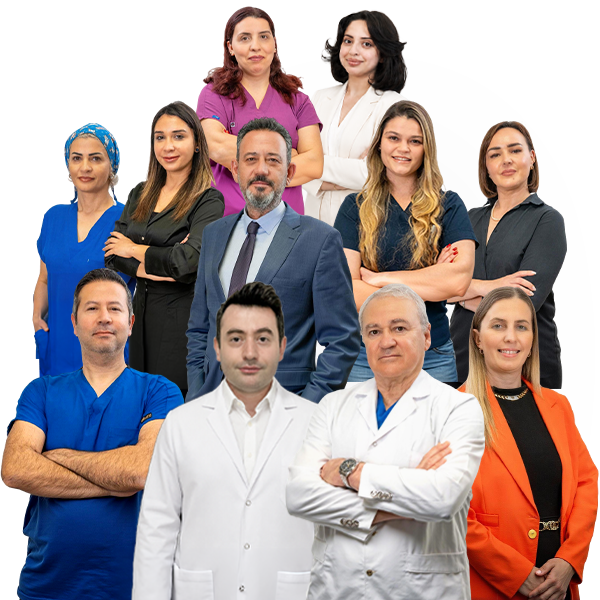
Experienced urology team
You work with our urologist, who specializes in Micro-TESE, TESA, and PESA.
Real-time laboratory collaboration
We work simultaneously with our embryology laboratory during the procedure; you are informed the moment sperm is found.
Genetic counseling support
In cases where it is needed, genetic test results are reviewed together with a specialist.
End-to-end coordination
Travel, accommodation, and appointment scheduling are managed on your behalf by a coordinator.
Psychological counseling support
You can always access the support of a specialist psychologist to help you cope with the emotional weight of an azoospermia diagnosis.
Transparent communication
Throughout the process, you receive daily, friendly updates on the progress of your treatment.
Real Patients, Real Stories
The stories of families who chose this path and welcomed the baby of their dreams inspire us every day. Here are some reviews from patients treated at our center.
Deciding to start IVF treatment with my husband was difficult for us. But thanks to the care and experience of the team at Kolan British Tüp Bebek Merkezi, everything went well. We now hold our baby in our arms and feel endless happiness. Thank you!
After years of unsuccessful attempts, we came to Kolan British Tüp Bebek Merkezi. They supported us throughout the entire process with professionalism and warmth. Now we're living the most beautiful days of our lives with our son. We are so grateful!
In our 10 years of marriage, we've never been this close to our dream of becoming parents. Thanks to the care, experience, and warmth of the Kolan British team, we are now expecting our baby. We are grateful to the whole team!
Cost of TESE / Micro-TESE
The cost of TESE / Micro-TESE is determined individually based on the method used (TESE, Micro-TESE, TESA, or PESA), the type of anesthesia, and any additional genetic testing needed. Rather than quoting a standard figure, we prepare a detailed and transparent cost plan tailored to you at your free preliminary consultation — no surprises, just clarity.
Frequently Asked Questions
What is the difference between Micro-TESE and TESE?
Is Micro-TESE painful, and does it require general anesthesia?
How long does recovery take after TESE/Micro-TESE?
Can Micro-TESE be performed more than once?
What is the difference between TESA/PESA and Micro-TESE, and who is suited to which?
Related Treatments
Free Preliminary Consultation
Our specialist consultants will get back to you as soon as possible.
