




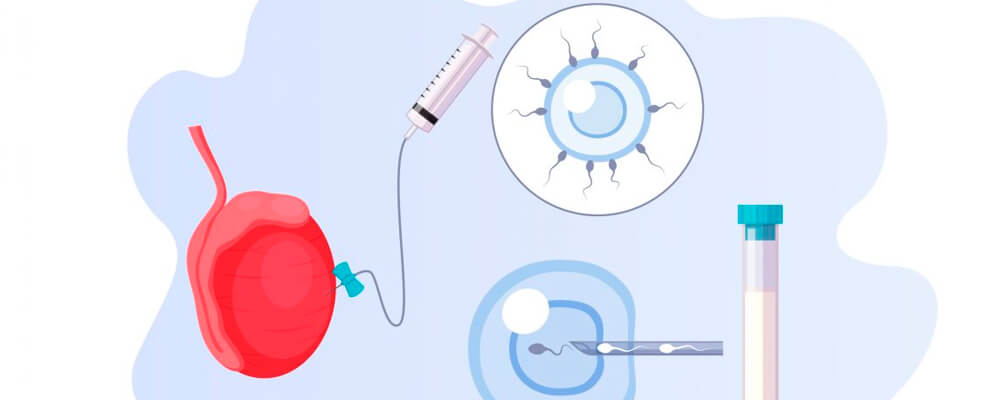
tea It is the process of finding sperm from the testicle by surgical procedure.
It is made to find sperm from people who do not produce sperm for any congenital or acquired reason and therefore do not have sperm in the sample of semen.
A tissue sample is made by making an incision on the testicle.
Azoospermia (ie, with no sperm in semen) The problem that exists in people cannot be solved medically or surgically, and if IVF treatment is planned, the sperm required in the procedure Micro-Tessa method is tried to be found.
Difference between micro TESE and TESEis that the micro TESE process is performed under the microscope.
The urology doctor can more easily distinguish between the sperm production centers called tubul by magnification under the microscope.
In this way, the chance of finding sperm is increased and the damage to the remaining testicular tissue is minimized by taking smaller amounts of tissue.
What are the risks of TESE?
Micro-tete is a reliable and long-term surgical procedure, and there is no serious risk due to the procedure.
However, the following conditions can be observed due to surgery:
* Pain
Bleeding
* bruising on the skin of the testicles
* Painful blood accumulation, swelling (hematoma)
* Weakening of the testicular tissue, which is due to the TECH procedures performed in large numbers, especially in inappropriate conditions.
Can micro TESE be done more than once?
The urology doctor can perform the micro TESE procedure more than once according to the examination and laboratory results.
The recommended waiting time between two tees is usually 6 months.
Are there any alternative sperm finding techniques to Mikro Tese?
In cases where sperm production is normal in the testicle, but there is a problem or obstruction in the channels that allow the sperm to be expelled in the semen congenitally or acquired, sperm can be removed directly from the testicles with a needle.
The name of these processes tesa (testicular sperm aspiration) and PESA (percutaneous epididymal sperm aspiration) known as.
tesa (testicular sperm aspiration)
It is the process of removing sperm from the testicle with a needle.
PESA (percutaneous epididymal sperm aspiration)
It is the process of removing sperm with a needle from the sperm carrier channel called the epididymis.
Less surgical intervention is required in TESA and PESA methods than TESE.
The procedure can be performed under local anesthesia.
After the procedure, sewing etc. does not need to be placed.
The risk of bleeding may also be very low in these methods.
Our center, together with the urology doctor experienced in IVF, TESE / TESA / PESA successfully implements its transactions.
Frequently Asked Questions
We usually start treatment on the 2nd or 3rd day of your period, and the process is completed within approximately 20-21 days. After the transfer, we wait 12 days and perform a pregnancy test on your blood.
Our success rates generally range between 60% and 80%. These rates may vary depending on age and health status.
Our donors are selected from healthy individuals aged 20-30 who meet the appropriate criteria.
Yes, we can select healthy embryos using genetic screening methods. For couples with a family history or risk of genetic disease, this method offers a very high chance of having a healthy baby.

Free Consultation
Our expert consultants will get back to you as soon as possible.
